How To Spot A First Edition 'The Hobbit'
23/08/2026 Latest News
How To Spot A First Edition 'The Hobbit' By JRR Tolkien
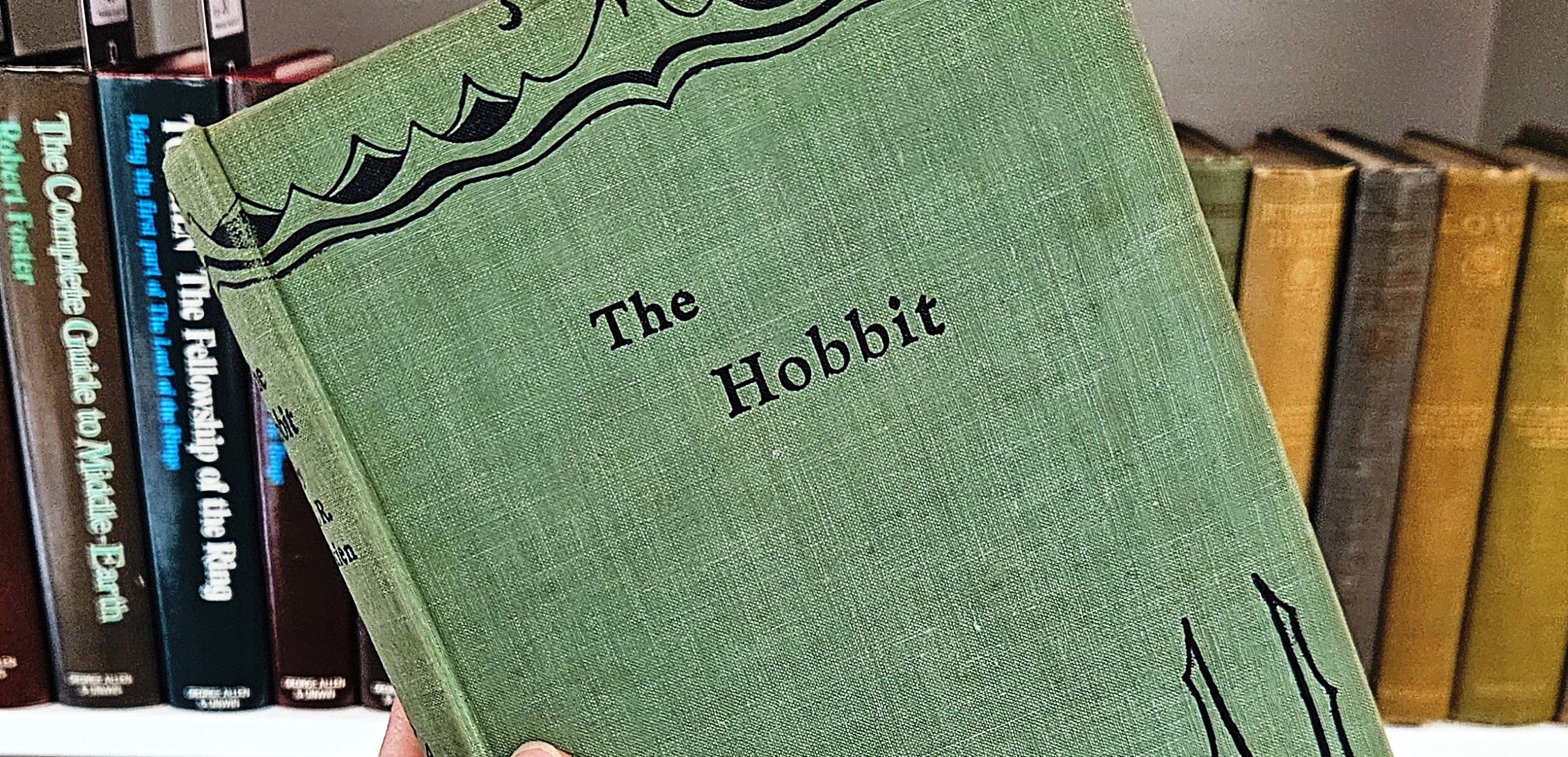
Discovering a forgotten copy of J.R.R. Tolkien’s The Hobbit in an attic, house clearance, or family bookcase is the ultimate dream for book collectors and treasure hunters alike. Published on 21st September 1937 by George Allen & Unwin Ltd, the original UK printing comprised a tiny run of just 1,500 copies. Because this beloved fantasy novel has gone through dozens of iterations over nearly a century, identifying a genuine, ultra-rare 1937 true first edition and first impression requires a keen eye for specific literary details. At Auctioneum, our specialists frequently evaluate potential literary treasures, and we have created this guide so you can independently examine your volume to determine if you are holding a life-changing piece of modern literature.
To begin, open the book directly to the copyright page, which sits on the reverse side of the main title page. A true first printing must feature the exact line "First Published in 1937" with absolutely no mention of subsequent years, additional printings, or later impressions. If your copy lists a "Second Impression" or any date after 1937 on this page, it belongs to a later print run. Once you verify the date, turn to page 193 and scan down to line 25. In the original 1,500 copies, a famous typographical error appears where the word "Dodges" was accidentally printed instead of "Dodgins". This specific printer's mistake was corrected for the second impression in late 1937, making page 193 one of the quickest ways to verify your book's true first-issue status.
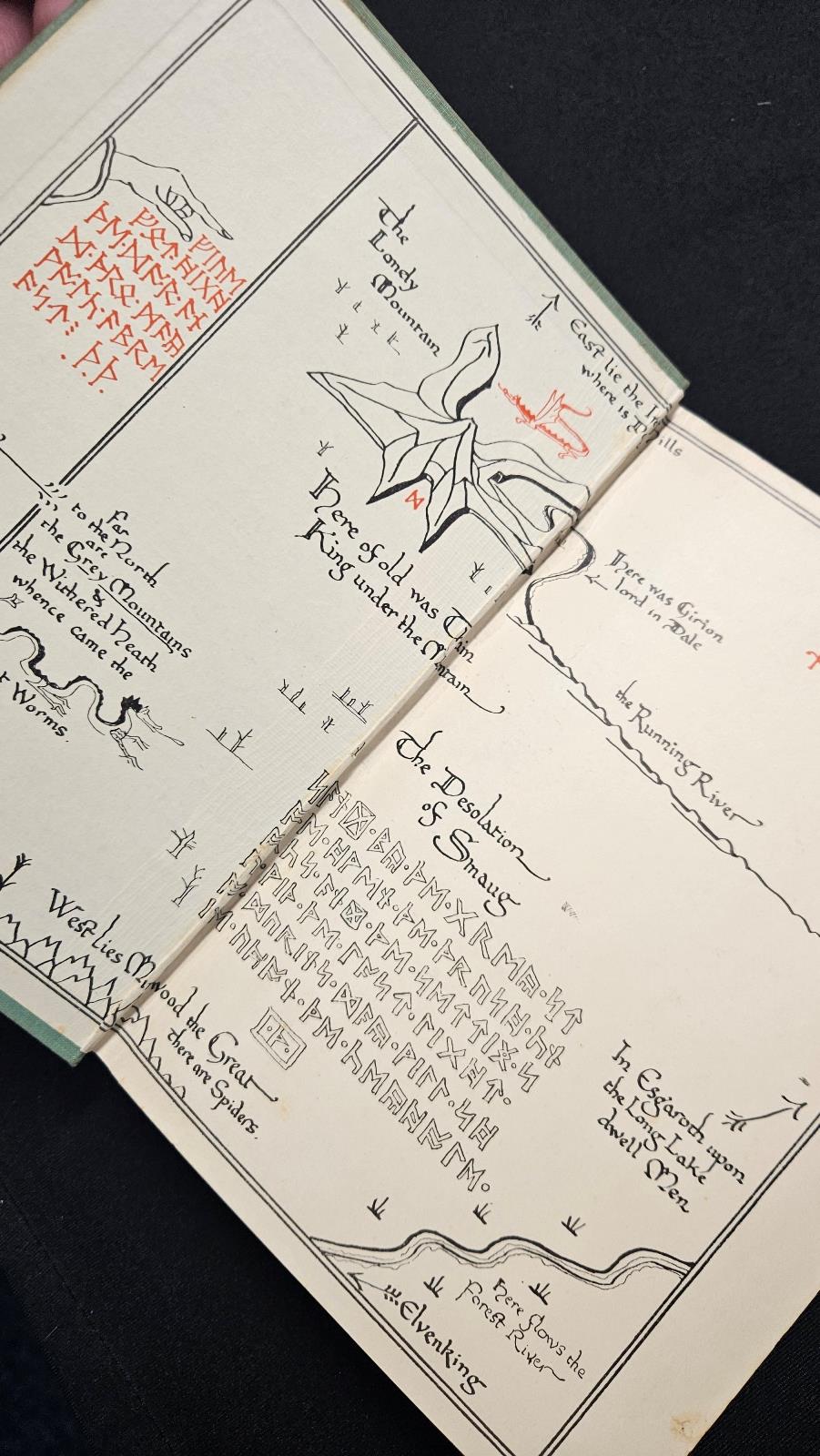
Next, examine the physical cover and internal artwork of the volume itself. The original binding features a pale sage-green cloth casing decorated with a dark blue ink design depicting Smaug the dragon along the bottom edge and the Misty Mountains across the top. Open the book to inspect the endpapers pasted inside the front and back covers; a genuine first impression contains two distinct maps drawn by Tolkien himself - Thror’s Map and the Map of Wilderland - both printed strictly in red and black ink. Furthermore, leaf through the pages to count the illustrations. The true first impression includes exactly ten black-and-white full-page illustrations, including the iconic frontispiece of Hobbiton-across-the-Water. Crucially, a genuine 1937 first impression contains no full-colour plates whatsoever, as colour illustrations were only introduced in later printings.
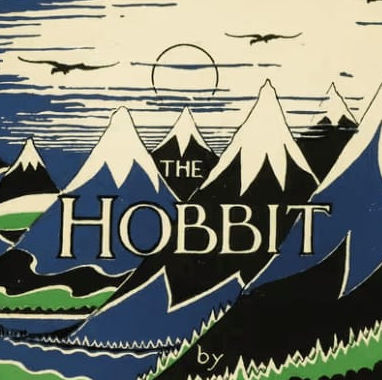
Inspecting the dust jacket represents another vital step, as it is the single most valuable component of a rare book's presentation. Original 1937 dust jackets are exceptionally rare, and finding a first edition with its original jacket intact dramatically enhances its value at auction. The dust jacket was designed by Tolkien using a palette of blue, green, black, and white on a light grey paper stock. To confirm its authenticity, look at the front flap, which must remain unclipped and display the original publication price of 7s. 6d. net. Flip to the rear flap and examine the advertisement for The Dragon Green; the earliest state of the first edition jacket contains a famous misprint where author Charles Dodgson's name is spelled "Dodgeson". In many authentic copies, publishers corrected this error by hand using black ink before shipping.
If your volume matches these markers, Auctioneum is uniquely positioned to help you realize its full market potential.
If your copy turns out not to be a true 1st/1st, there is absolutely no need to worry - early, signed, and special printings of The Hobbit remain exceptionally sought-after by collectors. For instance, second impressions from December 1937 (which introduced the famous full-color plates), third and fourth impressions from the late 1930s and 1940s, and any early printings bearing original dust jackets command impressive figures on the secondary market. Furthermore, signed or inscribed copies, early leather-bound luxury editions, and mid-century printings in pristine condition routinely draw fierce competitive bidding at auction. You could still be sat on a 'dragon's hoard!'
Our specialist department holds an incredible track record with Tolkien masterworks, highlighted by our headline discovery of an unjacketed 1937 first edition discovered during a routine home clearance in Bristol. Offered at auction, global competitive bidding drove the final hammer price to a staggering £43,000, setting a world record for the highest price ever achieved for a first impression of The Hobbit sold without its dust jacket. Whether your copy is an unjacketed treasure found on a forgotten bookshelf or an immaculate jacketed volume, our international outreach, dedicated rare book auctions, and record-breaking marketing ensure your literary history yields extraordinary results.
Contact us today to discuss selling your Tolkien treasures.