05/08/2026 Latest News
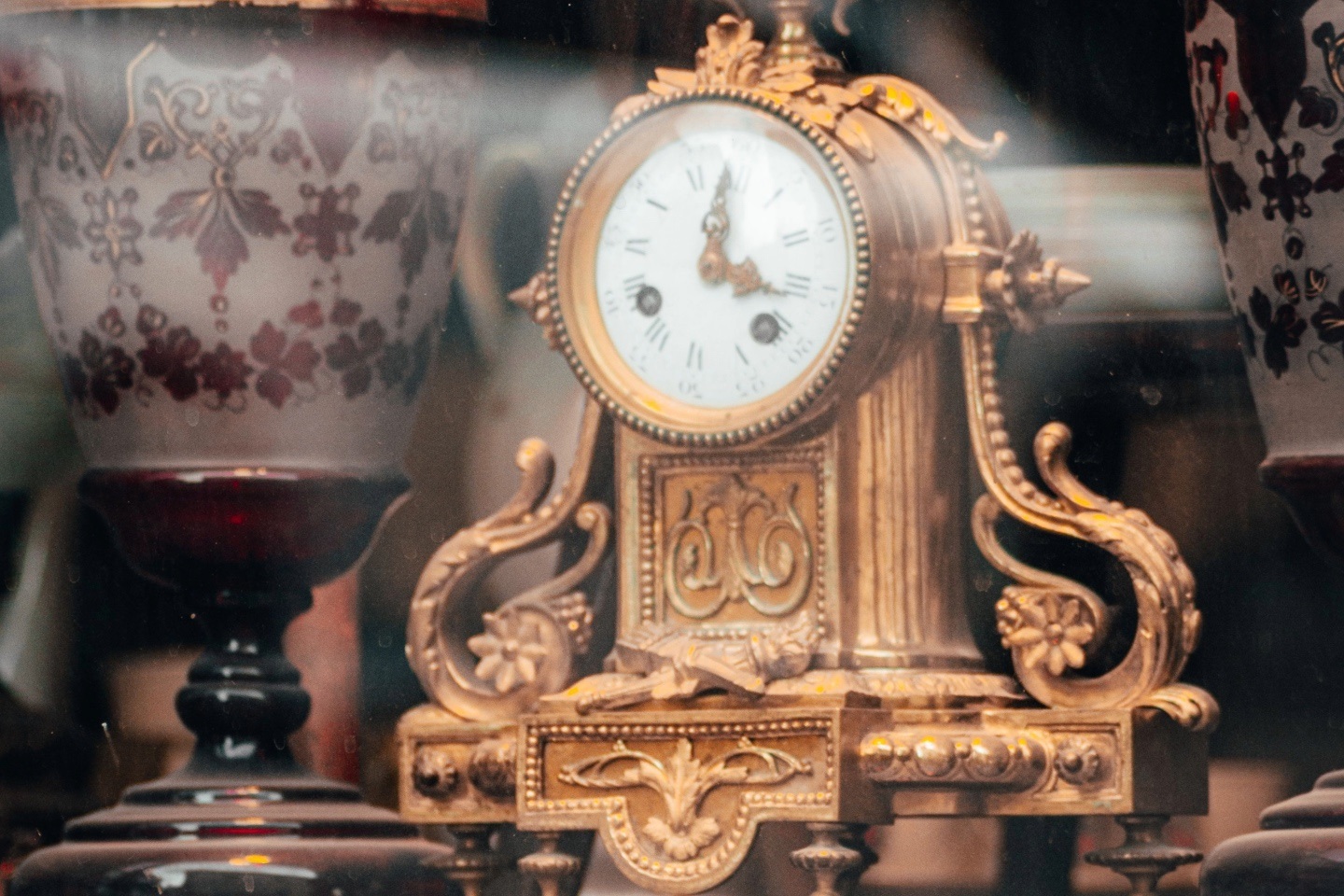
Antique clocks can be highly decorative, technically fascinating and closely connected to the homes and families that owned them. They are also extremely varied. Two clocks that initially appear similar may differ substantially in age, quality, rarity and value.
A clock does not have to be working perfectly to attract interest at auction. Equally, age alone does not guarantee that it will be valuable.
Identifying an antique clock usually involves examining the maker, movement, dial, case, condition and any changes made during its lifetime. Here are some of the most useful details to investigate.
The word “antique” is generally used for objects that are at least 100 years old. However, clocks that are slightly younger may still be collectable, particularly where they have an interesting design, a recognised maker or an unusual mechanism.
Common types of antique and collectable clocks include:
Correctly identifying the type of clock is an important first step, but it is only one part of determining its age or value.
A maker’s name can sometimes be found on the dial, movement, backplate, case, label or winding key.
On a longcase clock, the name and town may appear on the dial. Other clocks may carry initials, symbols, serial numbers or trade marks on the movement. Museum collections show that makers’ names, places and numbers can appear in several positions, including on dials and engraved components.
Record the wording exactly as it appears. Do not assume that every name belongs to the person who made the entire clock. It may identify:
Search results based on a name alone can also be misleading. Several makers may have shared a surname, while later clocks were sometimes produced in historic styles.
A specialist may need to compare the name, location and design of the clock with known records.
The movement is the mechanism that powers the clock. It can provide important clues about how and when it was made.
Features that may be relevant include:
Do not dismantle the movement unless you are experienced in clock repair. Clock mechanisms can be delicate, and removing components may cause damage or make it difficult to establish how they were originally fitted.
If the clock has weights, a pendulum, winding key or other loose components, keep everything together.
A serial number can be useful, but it must be interpreted carefully.
Some established manufacturers kept records that allow serial numbers to be linked to approximate production dates. In other instances, a number might identify a model, batch, component or retailer rather than a year.
The British Museum records examples in which movement and case numbers help date a clock, but also warns that a number which looks like a year may instead be a serial number.
Do not assume that a number such as 1754 proves the clock was made in 1754. It must be considered alongside the movement, dial, case and known history of the maker.
The dial can provide information about the clock’s period, origin and quality.
Look at:
Certain design features were fashionable during particular periods, but styles were often revived later. A clock that looks Georgian, Victorian or Art Deco is not necessarily from that period.
Additional features can make a clock more interesting. Calendar displays, moon phases, alarms, musical movements and unusual striking mechanisms may increase collectability, depending on their quality and originality.
The case was designed to protect the movement, but it is also a major part of the clock’s appearance and value.
Cases may be made from:
Consider the quality of the construction, veneers, carving, marquetry, mounts and other decoration.
Check whether the case appears consistent with the movement and dial. Antique clocks are sometimes described as “marriages”, meaning that components from different clocks have been combined. A good-quality marriage can still be attractive and saleable, but it may be worth less than a clock retaining its original matching parts.
Collectors often value originality, although it is normal for a clock to have received some repairs during a long working life.
Possible replacements or alterations include:
Old repairs are not always a serious problem. The effect on value depends on the importance of the clock, the quality of the work and how much original material remains.
Try not to replace missing parts before obtaining advice. A modern reproduction component may be less desirable than leaving the clock incomplete for a specialist buyer to assess.
A working clock may be easier to sell, but a non-working clock is not necessarily without value.
Buyers may still be interested if the clock has:
Do not repeatedly wind or force a clock that has stopped. Forcing a stiff key, moving the hands incorrectly or transporting the clock while the pendulum is attached can cause further damage.
A clock that appears to run briefly may also need servicing. Auction descriptions commonly distinguish between a clock ticking at the time of inspection and a clock guaranteed to remain in working order.
Condition is important, but clocks should not necessarily look new.
Signs of age such as gentle wear, minor fading and an established surface can contribute to an antique clock’s character. Heavy polishing or unsympathetic restoration may remove original finishes and reduce collector interest.
Look for:
Professional restoration can be worthwhile for certain clocks, but it can also be expensive. Obtain an appraisal before commissioning significant work.
A documented history can add interest, especially where a clock was made for a particular house, business, ship or notable owner.
Useful evidence might include:
Do not remove old labels, pencil notes or inscriptions. Even a repairer’s mark inside the case may help establish where the clock has been and when it was serviced.
There is no single type of clock that is always valuable.
The market can be influenced by changing tastes, practicality and demand as well as rarity. Large clocks may be technically impressive but require space, while smaller mantel, carriage and decorative clocks may appeal to a broader range of homes.
Factors that commonly contribute to value include:
The combination of these factors is more important than any one feature.
Clear photographs can help an auctioneer provide an initial opinion.
Include images of:
Include measurements, particularly the overall height, width and depth.
Do not remove a movement purely to photograph it. If it is not safely accessible, photograph what can be seen without dismantling the clock.
Before moving a longcase or pendulum clock, remove the pendulum and weights where possible and wrap them separately. Secure doors and loose components without placing adhesive tape directly onto polished or historic surfaces.
Keep the clock upright unless a specialist advises otherwise. For large, fragile or particularly valuable clocks, professional transport may be appropriate.
Retain every component, including apparently unrelated keys, brackets and pieces of wood found inside the case.
Auctioneum handles clocks and watches at auction as well as, furniture, decorative antiques and complete collections from across Bristol and the wider region.
Whether you have inherited a longcase clock, discovered a mantel clock during a house clearance or own a collection built over many years, our specialists can assess its maker, age, condition and likely auction interest.
Send clear photographs, measurements and any known history to begin the valuation process. Avoid cleaning, repairing or dismantling the clock before receiving advice, as its existing condition may contain useful clues about its history.