18/11/2025 Latest News
Whether you’ve inherited a painting, discovered a forgotten print in the attic, or picked up something intriguing at a car boot sale, you'll probably be wondering if it has any value? At Auctioneum, we’ve helped countless people uncover the hidden worth of pieces that might otherwise have been overlooked. While not every painting is a masterpiece, knowing what to look for can make all the difference between a decorative piece and a valuable investment.
One of the first things to check is whether the artwork is signed. A visible, legible signature, especially one that can be matched to a known artist, can add considerable value. However, it’s important to remember that some valuable works are unsigned. Many 19th and early 20th century artists, for example, produced preliminary sketches and studies that weren’t intended for sale but are now highly sought after.
If you find a signature, try comparing it to known examples online or in art reference books. Be wary of forged signatures or those that appear added later in a different hand or medium. Auctioneum’s valuers often identify authenticity issues simply by examining the flow and placement of a signature under magnification.

Oil on canvas remains one of the most desirable and durable forms of fine art, particularly when the painting has good depth, colour balance, and evidence of skilled brushwork. Watercolours, prints, and sketches can also be valuable, but factors such as fading, staining, or discolouration can significantly affect worth.
Certain materials or techniques can indicate quality. For instance, early lithographs, hand-coloured etchings, or works on fine handmade paper can all signal that a piece was created with care and expertise. Auctioneum specialists look closely at the texture and composition of a piece to determine its quality and age.

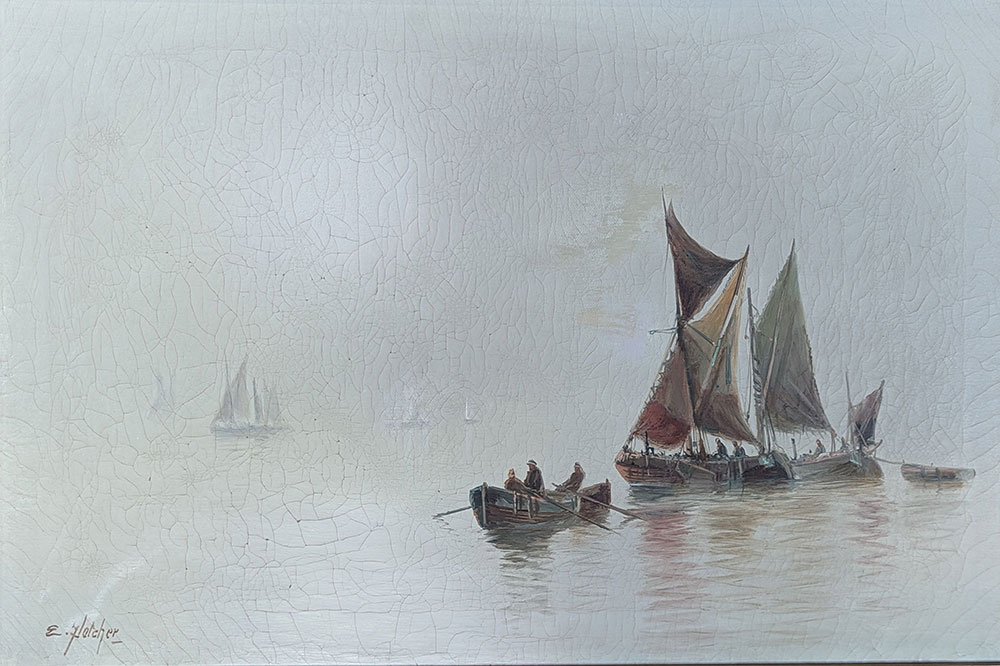
Art movements and themes go in and out of fashion, but some remain timeless. Landscapes, portraits, and maritime scenes from the Victorian and Edwardian eras are consistently popular with collectors. Mid-century modern and abstract works have also seen a strong resurgence in recent years.
Pieces that represent an important artistic period, or that reflect a recognisable style, tend to hold greater value. Similarly, local or regional scenes can be highly collectable, particularly if the artist is known to have worked in or around that area. Auctioneum’s fine art department often sees increased interest in paintings depicting Somerset, Bristol, and Bath, as collectors seek to preserve regional heritage.
Condition is key in the art world. Even minor damage, such as a tear, crease, or patch of mould, can reduce an artwork’s value considerably. However, sympathetic restoration by a qualified conservator can often improve the piece’s condition and protect its long-term value.
Provenance ie. proof of ownership and history, is another major factor. An artwork accompanied by documentation, such as an exhibition label, gallery receipt, or auction catalogue reference, will generally command a higher price. In some cases, the story behind a painting can add as much appeal as the work itself.
Prints and etchings are not always mass-produced. Many were created in limited editions, signed and numbered by the artist. Lower edition numbers, or works printed before the final state (known as proofs), are usually the most desirable. Scarcity also enhances value: if few copies or similar works survive, collectors are often willing to pay a premium.
Auctioneum’s valuation team frequently helps identify limited-edition works by artists such as Henry Moore, David Hockney, or Lowry, where the edition details may be hidden in pencil beneath the mount.
Even a beautiful painting might not hold significant value if the artist is unknown or little-documented. Start by researching any visible names or initials, and cross-reference with online art databases, such as Artprice or MutualArt. Local art societies and museums can also be valuable sources of information, particularly for British artists who may have worked outside London’s main art scene.
Market trends fluctuate, so value can change over time. An artist who was relatively unknown a decade ago may suddenly rise in popularity after a major exhibition or a television feature. Auctioneum’s regular art sales give a good sense of what’s currently in demand across the UK.

Ultimately, there’s no substitute for an expert opinion. At Auctioneum, our team of specialists regularly provides complimentary valuations for paintings, prints, and sculptures. Using years of market experience and access to international sales databases, we can give an accurate picture of current market value and advise on the best route to sale.
Even if your artwork turns out not to be a high-value piece, it may still hold decorative or sentimental worth, and a professional assessment ensures you make informed decisions.
Many of the most exciting discoveries happen by accident, during house clearances, renovations, or downsizing. Auctioneum often uncovers valuable paintings and sculptures hidden in lofts, cupboards, or behind other framed works.
If you’re sorting through an estate or decluttering a property, it’s worth having a professional pair of eyes on any artwork before donating or disposing of it. Our house clearance services in Bristol and Bath are designed precisely for that: combining practical clearance with expert appraisal, so nothing of potential value goes unnoticed.

If you suspect you might have a valuable piece, we recommend arranging a free, no-obligation valuation with Auctioneum. Whether it’s a traditional oil painting, a 20th-century print, or a piece discovered during a house clearance, our specialists can provide honest guidance and, if appropriate, include it in one of our upcoming Fine Art & Antiques auctions.
You can book a valuation online or visit us at our Bristol saleroom to speak directly with one of our experts.