04/08/2026 Latest News
Jewellery is often described as antique, vintage, period, retro or collectable, but what do these terms actually mean? If you have inherited a ring, discovered a brooch in a drawer, or are thinking about selling a jewellery collection at auction, understanding the difference between vintage and antique jewellery can be a useful first step.
At Auctioneum, jewellery is one of the many specialist areas regularly represented across our Bristol and Bath salerooms, with auctions featuring antique, vintage and contemporary pieces in silver and gold. While age is important, it is only one part of the story. Design, condition, materials, craftsmanship, gemstones, maker, provenance and current collector demand can all influence how desirable a piece may be at auction.
So, what separates vintage jewellery from antique jewellery?
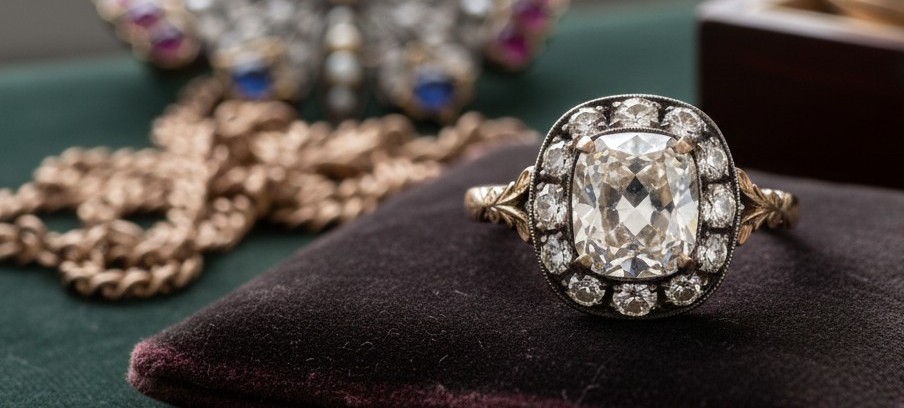
Antique jewellery is generally understood to be jewellery that is at least 100 years old. This means that, as time moves on, more pieces gradually enter the antique category.
At the time of writing, jewellery from the Georgian, Victorian, Edwardian and early Art Deco periods may fall into the antique category, depending on the exact date of the piece. These items often appeal to collectors because they reflect the style, materials and craftsmanship of a particular period in history.
Antique jewellery can include rings, brooches, necklaces, lockets, bracelets, earrings, watch chains, mourning jewellery, cameos, signet rings and more. Some pieces may be made from high-carat gold, silver, platinum or other precious metals, while others may feature diamonds, sapphires, rubies, emeralds, pearls, garnets, paste stones or enamel work.
One of the reasons antique jewellery can be so appealing is that it often carries a sense of history. A Victorian mourning brooch, an Edwardian diamond pendant or a Georgian ring may tell us something about fashion, society, sentiment and craftsmanship at the time it was made. These details can make antique jewellery especially interesting to collectors.
Vintage jewellery is usually used to describe jewellery that is older than around 20 years, but less than 100 years old. It is not as old as antique jewellery, but it still belongs to a previous era and may reflect the fashion, design and materials of its time.
This could include jewellery from the 1930s, 1940s, 1950s, 1960s, 1970s, 1980s or 1990s. Vintage jewellery might include Art Deco style pieces, mid-century cocktail rings, 1970s gold chains, bold 1980s earrings, designer costume jewellery or signed pieces from well-known jewellery houses.
Vintage does not automatically mean valuable, but it does often mean collectable. A piece may be sought after because of its designer, style, material, rarity or cultural appeal. For example, signed designer jewellery, unusual mid-century pieces, high-quality gold jewellery or distinctive vintage costume jewellery can all attract strong interest if the right buyers are looking for them.
It is easy to assume that older jewellery is always more valuable, but this is not always the case. A small antique piece in poor condition may be worth less than a well-made vintage designer piece in excellent condition.
When assessing jewellery, specialists will often look at several factors, including:
A 100-year-old gold ring may have antique interest, but a signed vintage Cartier, Tiffany, Boucheron or Van Cleef & Arpels piece may attract considerable attention because of the maker. Equally, an unsigned antique brooch may be highly desirable if it is beautifully made, set with good stones or representative of a particularly collectable period.
You may also hear the phrase period jewellery. This refers to jewellery that belongs to a recognisable design era, such as Georgian, Victorian, Edwardian, Art Nouveau or Art Deco.
This can be helpful because it tells us more than simply whether a piece is antique or vintage. It helps place the jewellery within a particular design movement.
For example, Georgian jewellery often features hand-crafted settings, closed-back stones and delicate detailing. Victorian jewellery can range from romantic and sentimental pieces to bold gold designs and mourning jewellery. Edwardian jewellery is often elegant and refined, with platinum, diamonds and delicate openwork. Art Deco jewellery is known for strong geometry, contrast, symmetry and stylish use of diamonds and coloured stones.
Understanding the period can help specialists assess not only the age of a piece, but also its style, rarity and collector appeal.
Retro jewellery usually refers to pieces from around the 1940s and 1950s, although the term is sometimes used more loosely. Retro jewellery is often bold, sculptural and glamorous, with large gold forms, colourful gemstones and distinctive mid-century design.
This type of jewellery can sit within the vintage category, but “retro” gives a more specific sense of style and period. It is a useful term when describing jewellery that has a strong mid-century look.
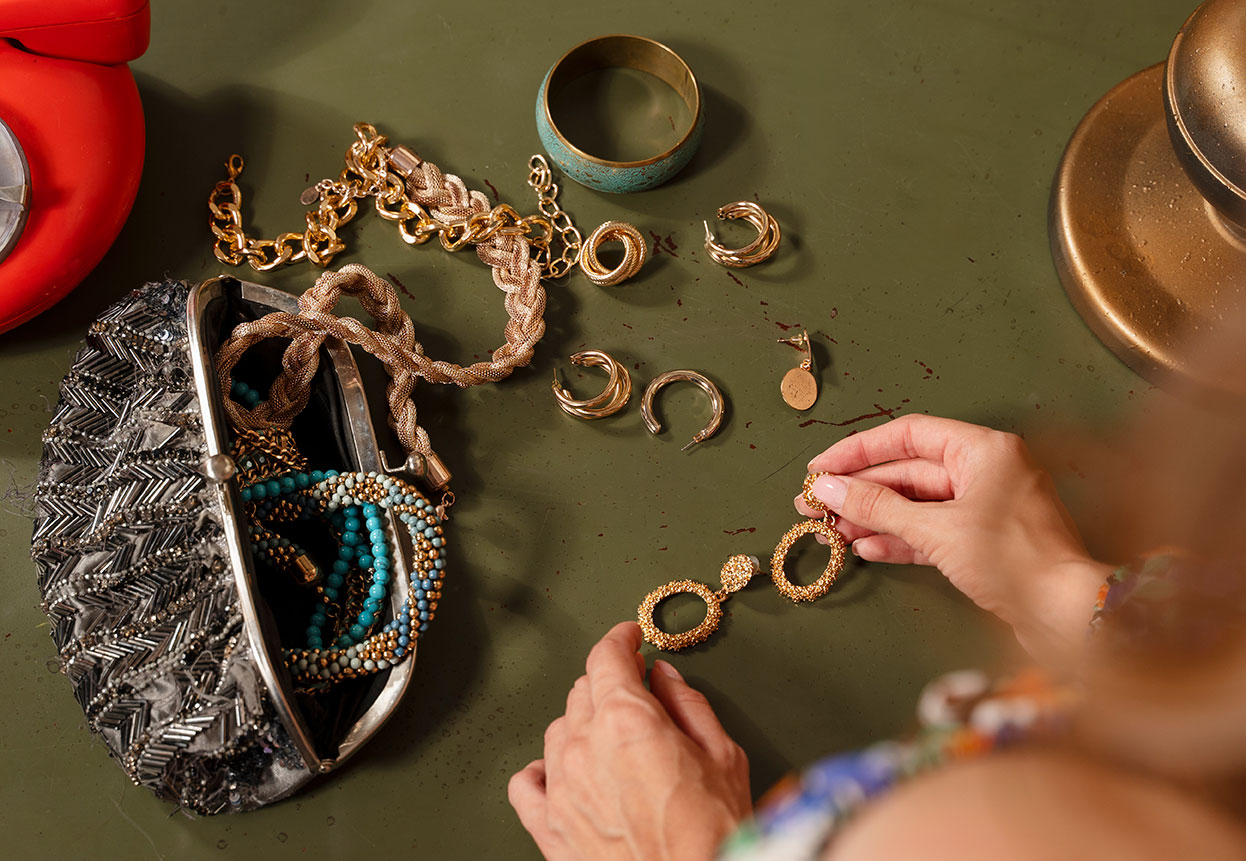
Costume jewellery is jewellery made from non-precious or less expensive materials, rather than fine gold, platinum, diamonds or precious gemstones. However, that does not mean it has no value.
Some vintage costume jewellery can be highly collectable, especially if it is signed by a recognised designer or fashion house. Condition is particularly important, as missing stones, damaged clasps or worn plating can affect value. Original boxes, labels or documentation can also add interest.
For anyone sorting through inherited jewellery, it is worth avoiding quick assumptions. A piece may not be made from precious metal, but it could still be collectable if it has the right design, maker or history.
There are several clues that may help identify whether jewellery is antique, vintage or modern.
Hallmarks can provide useful information about metal purity, assay office and sometimes date. The style of the setting, clasp, stone cut and construction can also offer clues. Older jewellery may show signs of hand-making, wear consistent with age or period-specific techniques.
However, it is not always straightforward. Jewellery can be altered, repaired, reset or reproduced. A modern piece can be made in an antique style, and an old stone may be placed in a newer setting. This is why a professional valuation can be helpful, especially if you are considering selling.
It is usually best to avoid heavy cleaning before having jewellery assessed. Gentle handling is fine, but harsh cleaning products, abrasive cloths or DIY repairs can damage delicate settings, stones, enamel, pearls or old metalwork.
If a piece has been tucked away for years, bring it as it is. Original boxes, receipts, family notes, certificates or any related paperwork should also be kept with the jewellery, as these can sometimes help with identification and provenance.
Auction can be a strong route for selling antique and vintage jewellery because it places pieces in front of buyers who are actively looking for collectable, unusual and period jewellery. Rather than being valued only for scrap metal or gemstone content, a piece can be assessed for its wider appeal.
This can be particularly important for antique rings, signed vintage jewellery, gold chains, diamond pieces, brooches, lockets, mourning jewellery, Art Deco jewellery, designer costume jewellery and complete collections.
Auctioneum holds regular jewellery auctions online and at our auction houses in Bristol and Bath, giving sellers access to a broad audience of collectors and bidders. Whether you have a single piece or a larger collection, a specialist valuation can help you understand what you have and whether auction may be the right route.
If you are unsure whether your jewellery is antique, vintage or simply collectable, Auctioneum can help. Our specialists can assess individual pieces and collections, explain what may influence value, and advise on selling through auction.
From antique gold rings and Victorian brooches to vintage designer jewellery, silver pieces and gemstone-set items, our team can help you take the next step with confidence.
Contact Auctioneum today to arrange a jewellery valuation at our Bristol or Bath saleroom, or find out more about selling jewellery at auction.